Blog

  • 8 BODY Symptoms You Should Be Aware Of

    Our bodies constantly communicate our health status through various signs. Here are eight important cues to pay attention to:

    A cyst is a small pocket of tissue often filled with fluid or pus. It can occur due to an injury, infection, or other issues. They’re usually benign but may need treatment for complications.

    Cysts can vary in appearance depending on their type and location. Here are 11 types of cysts.

    Epidermoid cyst

    close-up of an epidermoid cyst on the back of the neck

    Epidermoid cysts are small, benign bumps filled with keratin. Kertain is a protein that’s essential in forming your skin, hair, and nails. Epidermoid cysts occur when something blocks hair follicles, and skin cells build up beneath this blockage.

    These cysts can look like a skin-colored, tan, or yellowish bump filled with thick material. They typically occur on your face, neck, or torso, but can occur across your body.

    In rare cases, epidermoid cysts can be caused by an inherited condition called Gardner syndrome.

    Sebaceous cyst

    close-up of a sebaceous cyst behind the left ear

    Sebaceous cysts are filled with sebum and are less common than epidermoid cysts. They often form within sebaceous glands, which are part of your skin and hair follicles. Sebaceous glands make oil for your skin and hair.

    These cysts most commonly occur on your face, neck, or torso, and are often the result of damage to sebaceous glands.

    Breast cyst

    ultrasound image of a breast cyst

    Benign cysts can develop when fluid collects near your breast glands. They can cause pain or tenderness in the affected area.

    While breast cysts are noncancerous, there are many possible other more serious causes for a lump in your breast. It’s important to be familiar with how your breasts typically feel so you’re aware of changes. This way, you’re more likely to notice changes right away.

    You should try to make an appointment to see a healthcare professional if:

    • you discover a new lump
    • an area of your breast is noticeably different than the rest
    • a lump changes or grows larger
    • you notice unexpected discharge from the nipple
    • you have an inverted nipple, and it wasn’t always inverted

    Ganglion cyst
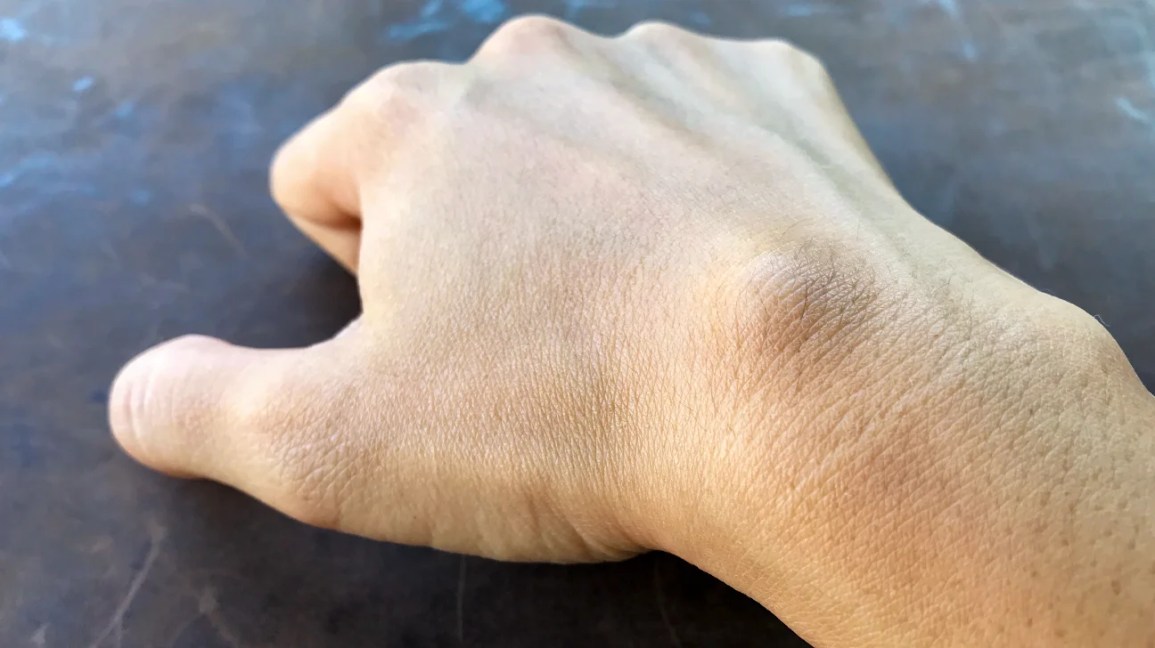
    close-up of a ganglion cyst on the top of the right wrist

    A ganglion cyst is a round, gel-filled lump of tissue that usually appears along tendons or joints, especially in the hands, wrists, ankles, and feet. Fluid accumulation can occur due to injury, trauma, or overuse, but often the cause is unknown.

    A ganglion cyst is common, harmless, and doesn’t cause pain or difficulties unless it grows and puts pressure on other structures.

    Pilonidal cyst

    close-up of a pilonidal cyst in the cleft of the buttocks

    A pilonidal cyst is a common skin condition that forms in the cleft at the top of your buttocks. It consists of a small hole or tunnel in the skin that may become infected and fill with fluid or pus and it typically occurs after puberty.

    Changing hormones, hair growth, and friction from clothes or from spending a long time sitting may all cause a pilonidal cyst.

    Symptoms of an infection include:

    • pain when sitting or standing
    • discolored or sore skin around the area
    • pus or blood draining from the abscess, causing a foul odor
    • swelling of the cyst
    • hair protruding from the lesion

    Ovarian cyst
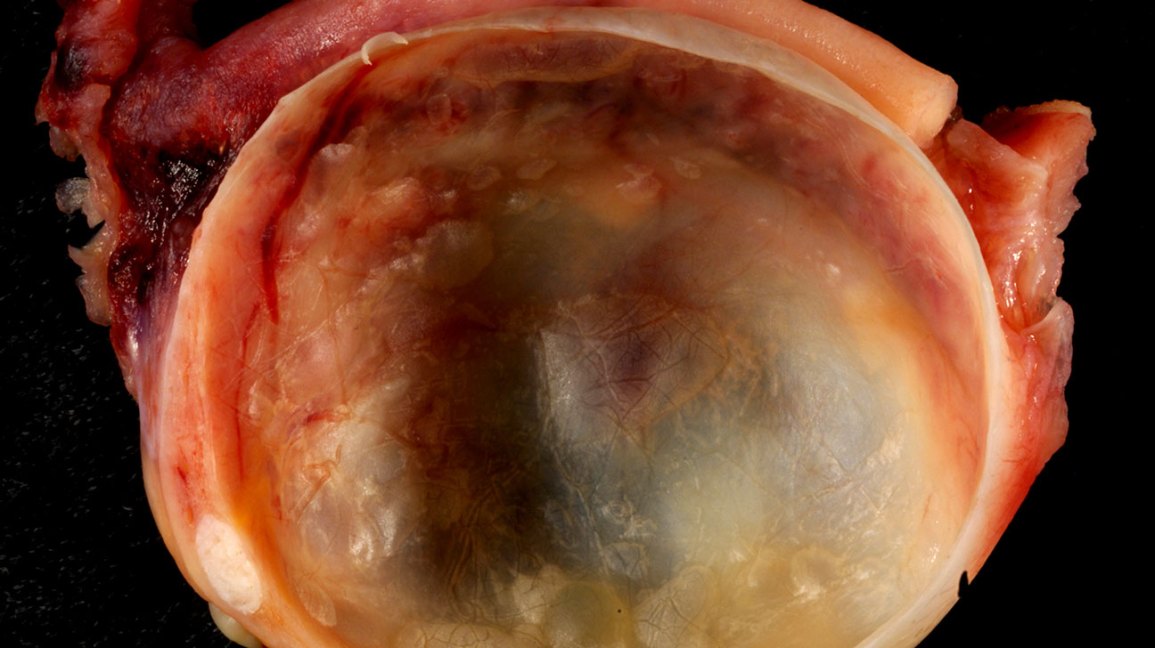
    close-up of an ovarian cyst

    Ovarian cysts often form when the follicle that normally releases an egg doesn’t open. This causes fluid to build up and form a cyst.

    Another common type of ovarian cyst occurs after the follicle releases the egg and improperly recloses and collects fluid.

    Ovarian cysts occur most often in those of menstrual age and are typically first found during pelvic exams.

    Ovarian cysts are associated with an increased risk of cancer when they occur after menopause.

    Baker (popliteal) cyst

    mri image of a baker’s cyst

    A Baker cyst is a swollen, fluid-filled sac at the back of your knee.

    Causes of Baker cysts include conditions or occurrences that affect the joints such as arthritis, inflammation from repetitive stress, or a cartilage injury. Baker cysts can cause inflammation and pain and lower range of motion in your knee.

    Physical therapy, fluid draining, and medication can all be used to help treat a Baker cyst.

    Pilar cyst

    close-up of a pilar cyst on the scalp

    A pilar cyst is a noncancerous, skin-colored, round bump that develops under the surface of your skin. They usually affect the skin on the scalp and results from protein buildup in a hair follicle.

    They’re not cancerous, but they can grow to a size that can be uncomfortable.

    Mucous cyst

    close-up of a mucous cyst on the inside of the lower lip

    A mucous cyst is a fluid-filled lump that forms on your lip or around your mouth when the salivary glands become plugged with mucus. The most common causes of mucous cysts include:

    • lip or cheek biting
    • lip piercings
    • rupture of the salivary gland
    • improper dental hygiene

    Mucous cysts will often go away on their own. But if you have recurring or frequent mucous cysts, you may need medical treatment.

    Branchial cleft cyst

    large branchial cleft cyst on the right side of the neck of a man

    A branchial cleft cyst is a type of developmental irregularity in which a lump develops on one or both sides of your neck or below your collarbone. It occurs during embryonic development when tissues in your neck and collarbone, or branchial cleft, develop differently.

    In most cases, a branchial cleft cyst isn’t dangerous. But it may cause skin irritation, skin infection, or — in very rare adult cases — cancer.

    Perineural (Tarlov) cyst

    mri image of perineural cysts on the spine

    A perineural cyst is a fluid-filled sac that forms on the spine.

    Causes are unknown, but it may result from back trauma, including falls, injuries, and heavy exertion.

    A perineural cyst can cause pain in your lower back, buttocks, or legs, but this is rare. If you do have symptoms, draining the fluid can help to relieve them.

    A pseudocyst shares some of the characteristics of a cyst, but the bump doesn’t have its own lining. Here are three types of pseudocysts.

    Folliculitis (ingrown hair cyst)

    close-up of an ingrown hair cyst

    Folliculitis is an infection of hair follicles. It’s often the result of a fungal or bacterial infection and can often resemble acne.

    These pseudocysts are often seen in people who use hair removal methods like shaving or waxing. Ingrown hair cysts are an example of folliculitis. While ingrown hair cysts are possible, if you have bumps that appear near ingrown hairs, there’s a good chance that they’re actually razor bumps instead.

    Razor bumps are also known as pseudofolliculitis barbae, which is a type of pseudofolliculitis. Unlike folliculitis, pseudofolliculitis isn’t usually infectious.

    Chalazion

    close-up of a right eye with a chalazion on the lower eyelid

    A chalazion is a small, usually painless lump on your eyelids that occurs when the duct of the meibomian gland, an oil gland, is blocked.

    These pseudocysts can cause tenderness, blurred vision, and painful swelling. If they get too big, they can cause vision difficulties.

    Cystic acne

    close-up of cystic acne bumps on the right cheek of a young man

    Cystic acne results from a combination of bacteria, oil, and dead skin clogging the pores. It’s the most severe type of acne, but it usually improves with age.

    Cystic acne can look like large, pus-filled boils on the skin. It can also be painful to the touch. If these boils rupture, they can cause scarring.

    Cystic acne most commonly occurs on your face, chest, neck, back, and arms.

    If you believe you may have cystic acne, a dermatologist can prescribe medications to help treat it.

    How to Set Realistic Low Sugar Goals

    Making changes to your eating habits can feel overwhelming, especially when it comes to reducing sugar.

    But with a thoughtful plan and the right mindset, you can create healthy, lasting habits that are easy to stick with.

    Here’s how to set realistic low sugar goals that support your well-being—without stress or extremes.

    1. Start by Understanding Your Current Intake

    Before setting any goals, it helps to know where you’re starting. For a few days, track the foods and drinks you consume and note how much sugar they contain. Pay attention to:

    • Sweetened beverages (soda, flavored coffees, energy drinks)
    • Packaged snacks and baked goods
    • Sauces, dressings, and condiments

    This gives you a clear picture of where sugar shows up in your routine and helps you spot easy areas to cut back.

    2. Set One Small Goal at a Time

    Trying to eliminate all added sugars overnight can be tough. Instead, aim for one achievable change at a time. For example:

    • Replace sugary drinks with sparkling water or herbal tea
    • Choose plain yogurt and add fresh fruit instead of buying pre-sweetened
    • Limit desserts to a few times a week instead of daily

    These small steps can add up to big changes over time.

    3. Make Your Goals Specific and Measurable

    Vague goals like “eat less sugar” are hard to track. Instead, try something more concrete, such as:

    • “I will drink water instead of soda five days this week.”
    • “I’ll have fruit for dessert three times this week.”

    Specific goals help you stay focused and motivated.

    4. Plan for Treats, Not Perfection

    It’s okay to enjoy a treat now and then. In fact, allowing room for balance can make it easier to stick with your goals. Try a flexible approach:

    • Use the 80/20 rule: eat nourishing foods 80% of the time, and enjoy favorites the other 20%
    • Plan ahead for special occasions or social events so you can indulge mindfully

    5. Check Labels and Learn to Spot Hidden Sugar

    Reading labels can be eye-opening. Look out for ingredients like:

    • Corn syrup
    • Cane juice
    • Fructose
    • Dextrose These all count as added sugar, even if they sound harmless.

    Look for products labeled “no added sugar” or “unsweetened” when available, and compare brands to find options with less sweetness.

    6. Celebrate Progress, Not Perfection

    Changing habits takes time. If you slip up, don’t be discouraged—acknowledge how far you’ve come and refocus on your next goal. Even reducing sugar a little each week can improve how you feel. Try journaling your wins, such as:

    • “Chose fruit over cookies today”
    • “Didn’t crave my usual afternoon soda”
  • What You Should Do!

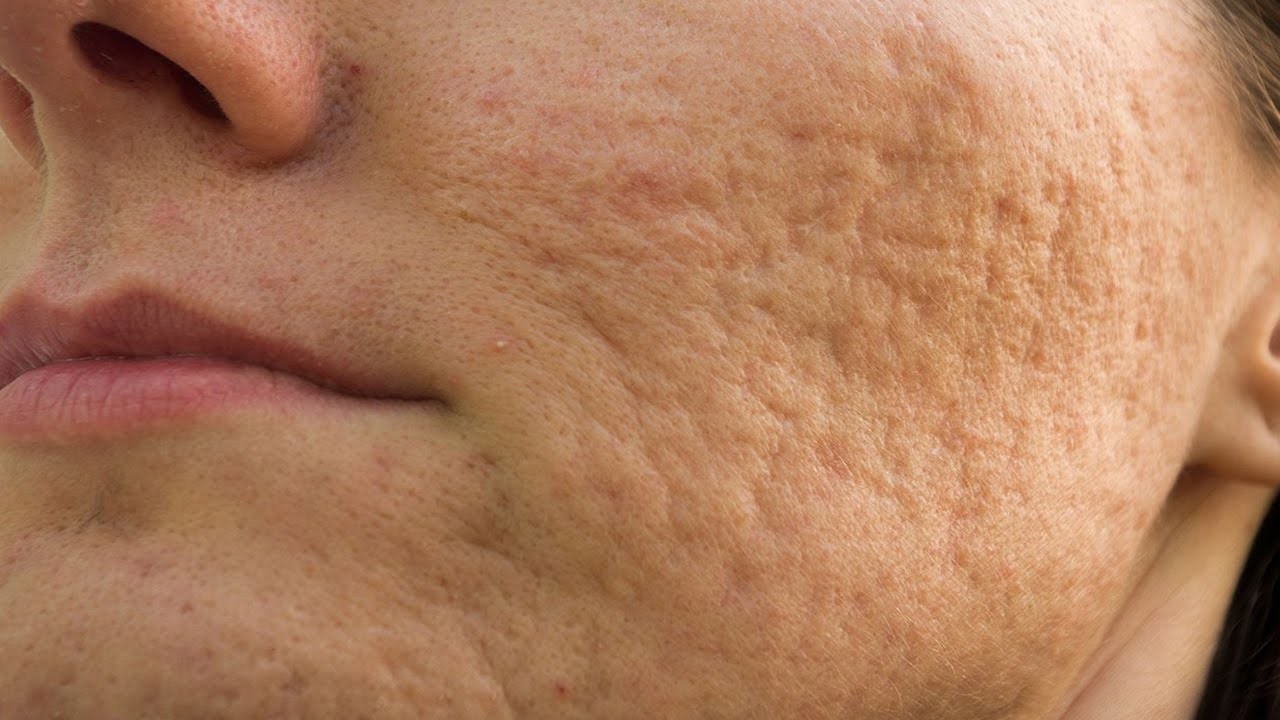
    Acne often acts as a clue about our health, but in most cases, it’s linked to simple lifestyle factors we can adjust. Identifying the triggers behind breakouts is key to prevention.

    Cheek acne is commonly caused by bacteria from phones, dirty pillowcases, or touching the face—cleaning these regularly helps. Forehead acne often results from oily hair or greasy hair products; switching to lighter products and using a gentle cleanser can help.

    Back acne may stem from sweat, tight clothes, or skincare products; showering after workouts and wearing breathable clothing is essential.

    Nose acne is common due to larger pores and excess oil; tea tree oil or sulfur-based products can help. Acne around the mouth may be caused by contact with phones or cosmetics—using non-comedogenic products and avoiding touching the area is important.

    Leg acne is usually due to friction or blocked follicles; if symptoms persist, consult a doctor. Jaw and neck acne often signals hormonal changes; a proper skincare routine and sunscreen use can manage it. Shoulder acne may result from clogged pores or tight clothes—hydration, sun protection, and loose clothing can reduce breakouts. Overall, paying attention to these signs can help maintain healthier skin.

    Acne can be a frustrating skin condition that affects individuals of all ages, particularly women. While hormonal changes and genetics play significant roles in acne development, several external factors can also contribute to clogged pores and breakouts.

    Understanding these triggers is essential for effectively managing acne and maintaining clear, healthy skin.

    Makeup Residue:

    Makeup products, especially those containing heavy oils and comedogenic ingredients, can clog pores and lead to acne breakouts.

    It’s crucial to remove makeup thoroughly before bedtime to prevent pore congestion and allow the skin to breathe overnight.

    Excessive Sebum Production:

    Overactive sebaceous glands produce excess oil, which can accumulate in the pores and mix with dead skin cells, dirt, and bacteria, resulting in clogged pores and acne.

    Managing sebum production through proper skincare and lifestyle habits is key to preventing breakouts.

    Poor Cleansing Habits:

    Inadequate cleansing can leave behind dirt, sweat, and environmental pollutants on the skin’s surface, contributing to pore congestion and acne development.

    Using a gentle cleanser twice daily helps remove impurities and prevent pore blockages.

    High Humidity and Sweat:

    Humid environments and excessive sweating can increase oil production and trap impurities in the pores, leading to acne flare-ups.

    Regularly washing the face and using non-comedogenic skincare products can help combat the effects of humidity and sweat on the skin.

    Unhygienic Phone and Pillowcase:

    Bacteria and dirt from unwashed hands, phones, and pillowcases can transfer onto the skin, causing pore blockages and acne.

    Keeping these items clean and practicing good hygiene habits can minimize bacterial contamination and reduce the risk of breakouts.

  • Causes that clog your pores…

    If topical treatment alone does not improve acne, or if acne is severe or extensive, oral medications are the best option.

    If you’ve tried several topical medications without success, or if your condition is severe, oral acne medications are usually the next step in the treatment.
    Video source 1:

    Video source 2

    Treatment usually includes oral antibiotics and applying a prescription gel or topical cream to the skin. Depending on people with acne, treatment may include using prescription creams to prevent acne, taking antibiotics to kill bacteria that contribute to acne, or if acne is severe. taking stronger medications such as like isotretinoin, or even minor surgery.

    Even if you have tried topical acne treatments such as creams or gels without any lasting results, laser therapy might be the right solution for you. While I would like you to try natural remedies first, if you are not seeing improvement and severe hormone acne is making your quality of life worse, other treatments can make a real difference. While it may take a while, treating hormonal acne from the inside out until your hormones are in their natural happy balance will allow your skin to heal.


  • Seven Things That Clog Your Pores And Cause Acne…

    Acne can be a frustrating skin condition that affects individuals of all ages, particularly women. While hormonal changes and genetics play significant roles in acne development, several external factors can also contribute to clogged pores and breakouts.

    Understanding these triggers is essential for effectively managing acne and maintaining clear, healthy skin.

    Makeup Residue:

    Makeup products, especially those containing heavy oils and comedogenic ingredients, can clog pores and lead to acne breakouts.

    It’s crucial to remove makeup thoroughly before bedtime to prevent pore congestion and allow the skin to breathe overnight.

    Excessive Sebum Production:

    Overactive sebaceous glands produce excess oil, which can accumulate in the pores and mix with dead skin cells, dirt, and bacteria, resulting in clogged pores and acne.

    Managing sebum production through proper skincare and lifestyle habits is key to preventing breakouts.

    Poor Cleansing Habits:

    Inadequate cleansing can leave behind dirt, sweat, and environmental pollutants on the skin’s surface, contributing to pore congestion and acne development.

    Using a gentle cleanser twice daily helps remove impurities and prevent pore blockages.

    High Humidity and Sweat:

    Humid environments and excessive sweating can increase oil production and trap impurities in the pores, leading to acne flare-ups.

    Regularly washing the face and using non-comedogenic skincare products can help combat the effects of humidity and sweat on the skin.

    Unhygienic Phone and Pillowcase:

    Bacteria and dirt from unwashed hands, phones, and pillowcases can transfer onto the skin, causing pore blockages and acne.

    Keeping these items clean and practicing good hygiene habits can minimize bacterial contamination and reduce the risk of breakouts.

  • Their acne is severe

    Their acne is severe

    A person should see a dermatologist if they have cysts, nodules, and deep, painful acne. They have late-onset or persistent acne: Late-onset acne may occur in adults who have never previously had the condition. Persistent acne is a relapse or continuation of acne from adolescence into adulthood

  • Morgan Freeman: A Lasting Legacy in Film, Advocacy, and Culture

    Morgan Freeman is widely recognized as one of the most respected and influential actors of his generation. With a career spanning more than five decades, Freeman is celebrated for his deep, commanding voice, memorable performances, and contributions to social causes both on and off screen. While misleading stories and hoaxes have occasionally circulated online about Freeman’s health or well-being, the truth is that his enduring legacy is built on talent, resilience, and authenticity—not rumor.

    Early Life and Entry into Acting

    Morgan Freeman was born on June 1, 1937, in Memphis, Tennessee. He developed an early interest in acting and drama, making his acting debut as a child in school plays. After graduating from high school, Freeman turned down a partial drama scholarship and served in the United States Air Force before returning to pursue acting seriously.

    He began his professional career on stage, including a role in an all-African American production of Hello, Dolly! in the 1960s. Freeman gained wider recognition in the 1970s as a cast member on the educational children’s television program The Electric Company, produced by PBS.

    Morgan Freeman SAG Awards Lifetime Achievement Honor Being

    Rise to Fame and Cinematic Success

    Freeman’s breakout role came with the 1987 film Street Smart, for which he earned an Academy Award nomination for Best Supporting Actor. From there, his filmography expanded rapidly, including critically acclaimed roles in Driving Miss Daisy (1989), Glory (1989), Lean on Me (1989), and Unforgiven (1992).

    One of his most iconic performances came in 1994’s The Shawshank Redemption, where he portrayed Ellis “Red” Redding. The film, though initially modest at the box office, has since become a cultural cornerstone and is ranked by IMDb as one of the highest-rated films of all time.

    Over the years, Freeman has been recognized with numerous accolades:

    • Academy Award for Best Supporting Actor for Million Dollar Baby (2004)

    • Golden Globe Award for Driving Miss Daisy (1989)

    • Screen Actors Guild Lifetime Achievement Award (2018)

    His authoritative voice and dignified presence have also made him a popular choice for narrating documentaries and commercials. Notably, he narrated March of the Penguins (2005), Through the Wormhole (2010–2017), and The Story of God (2016–2019), all of which received strong viewership and critical acclaim.

    Morgan Freeman's 'five favorite books of all time' – one will surprise you  - The Mirror US

    Online Rumors and Misinformation

    Despite his steady and public career, Morgan Freeman has often been the subject of internet hoaxes and fake death announcements. These viral rumors are entirely unfounded and have been debunked by reputable media outlets such as Reuters, Snopes, and USA Today.

    For instance, false claims circulated online in 2021 suggesting that Freeman had been involved in a helicopter accident—complete with fictionalized details and dramatic imagery. However, no such incident was reported by any legitimate source, including his official representatives, verified news outlets, or government aviation authorities.

    Freeman has not been publicly involved in any aviation-related accidents. These types of viral stories, while sometimes intended as satire or fiction, can create unnecessary confusion and emotional distress among fans and readers. Organizations like the Reuters Fact Check team and Snopes regularly encourage internet users to verify information before sharing, especially when it involves public figures.

    Morgan Freeman, 87, Makes Rare Public Appearance - PopCulture.com

    Commitment to Civil Rights and Social Advocacy

    In addition to his cinematic contributions, Morgan Freeman has been an outspoken advocate for civil rights, education, and environmental causes. He has publicly supported efforts to address climate change, racial justice, and prison reform.

    Freeman co-founded Revelations Entertainment, a production company dedicated to creating thought-provoking and socially impactful content. Through this platform, he has worked to produce documentaries and films that encourage dialogue on important global issues.

    In 2014, Freeman was honored with the Freedom Medal from the National Civil Rights Museum in Memphis for his lifelong commitment to equality and justice.

    He has also donated significant sums to educational programs and disaster relief efforts, including support for victims of Hurricane Katrina and funding for historically Black colleges and universities (HBCUs).

    Morgan Freeman's Favorite Books - Books of Brilliance

    Personal Life and Public Image

    Despite being a global celebrity, Freeman is known for maintaining a relatively private personal life. He resides in Mississippi and owns a farm that he converted into a sanctuary for bees to promote ecological health and sustainability.

    In public appearances and interviews, Freeman is consistently praised for his calm demeanor, thoughtful commentary, and commitment to authenticity. His presence—whether in film, on stage, or in documentaries—is often described as reassuring and authoritative.

    According to YouGov, a global public opinion and data company, Freeman consistently ranks among the most admired and trusted figures in entertainment.

    Voice of a Generation

    Morgan Freeman’s voice has become a cultural touchstone—instantly recognizable and deeply associated with wisdom, strength, and humanity. His narration work spans educational series, major films, and charitable campaigns. He has lent his voice to initiatives for organizations such as the American Red Cross, UNESCO, and the United Nations Foundation.

    The Smithsonian Institution has even featured his narration in several exhibits and educational materials, further emphasizing his role in shaping how knowledge and storytelling are shared with the public.

    Morgan Freeman plans series about St. Louis' Chuck Berry

    Conclusion: A Career Built on Integrity and Impact

    Morgan Freeman continues to be a symbol of excellence in acting and social responsibility. While the internet age has made it easier for misinformation to spread, it’s crucial to distinguish between fictional narratives and real achievements.

    Freeman’s career is not defined by fabricated drama or rumor, but by decades of powerful storytelling, humanitarian work, and an unwavering dedication to truth. His life stands as a testament to resilience, creativity, and purpose.

    Reputable Sources:

    • Academy of Motion Picture Arts and Sciences

    • National Civil Rights Museum – Freedom Award Honorees

    • Snopes – Morgan Freeman Death Hoaxes

    • Reuters Fact Check – False Claims About Morgan Freeman

    • YouGov – Morgan Freeman Popularity Ratings

  • This Woman Weighs Over 900 Pounds! | My 600-lb Life | TLC

    Check out the video below:

    TLC’s hit reality show My 600-Lb. Life follows the medical journeys of Americans who are struggling with obesity, with many starting the show at well over 600 pounds. These individuals work with Dr. Nowzaradan, a.k.a. Dr. Now, to explore the possibility of gastric bypass surgery and shed as much weight as they can, all while mending personal relationships and improving their confidence and mental health.

    Samantha Mason, who appeared on My 600-Lb. Life season 9 episode 1 in December 2020, has been of particular interest to fans of the show. She weighed nearly 1,000 pounds, in part due to her job as a fetish model where she was paid to eat on camera. However, Samantha feared that her obesity would take her life and leave her daughter without a mom. Keep scrolling to find out what happened to Samantha and where she is now.

    What Happened to Samantha Mason on ‘My 600-Lb. Life’?

    Upon entering the show, Samantha weighed more than 800 pounds, as seen on the scale. However, she revealed that she previously weighed 950 pounds. As a fetish model, Samantha made money from viewers paying her to eat. The job paid her bills and gave her confidence, but it had a negative impact on her health.

    “I found the perfect community to reinforce my worst habits,” she said in a clip from the show.

    Throughout the episode, viewers saw Samantha work hard to shed pounds. They also learned more about her upbringing, as she revealed her food addiction began when she was about 5 or 6 years old as a result of her parents’ divorce. She later dropped out of school at 17 years old and became pregnant with her daughter, Bella.

    While Samantha said she joined My 600-Lb. Life out of desperation and fear, she later admitted to regretting her appearance on the show. In a since-deleted TikTok video, Samantha said the show led her to receive severe criticism from viewers and changed her view of reality television. She called it “the ‘let’s exploit the fat people and laugh at them publicly’ show,” as Looper reported.

    Has Samantha Lost Weight?

    Samantha revealed in a TikTok video in October 2020 that she had just completed weight loss surgery and came out “114 pounds lighter.” In total, she said she had lost 320 pounds since May 2020.

    In June 2023, Samantha posted another video to the platform in which she revealed she had been hospitalized for a skin infection. She revealed that the doctor told her she needed to lose weight, so she responded, “I’ve lost 650 pounds.” However, she added, “I know I need to lose weight. I’m on it, thanks.”

    Where Is Samantha From ‘My 600-Lb. Life’ Now?

    Samantha leads a mostly private life today, but she shares occasional updates with her fans on TikTok. In a video posted in November 2022, she revealed that she doesn’t like social media and often spends time “isolating” with her cats and Bella as Samantha copes with depression.

    She also made a plea to her followers to stop commenting on the weight she has lost, particularly those who previously encouraged her eating habits when she was a fetish model.

    “Sometimes people will come up to me and say things like … ‘You look different. You’ve lost your belly. Your big beautiful belly is gone,’” she said, adding that she’s probably lost more than 650 pounds but still has “hips” and a larger belly. “It makes me feel so bad about myself. Don’t do that to me, guys.”

  • Embracing the Journey: How Models Are Redefining Beauty Standards with Self-Love Transformations

    Embracing the Journey: How Models Are Redefining Beauty Standards with Self-Love Transformations


  • 10 Of The Biggest Weight Loss Transformations Of All Time

    10 Of The Biggest Weight Loss Transformations Of All Time

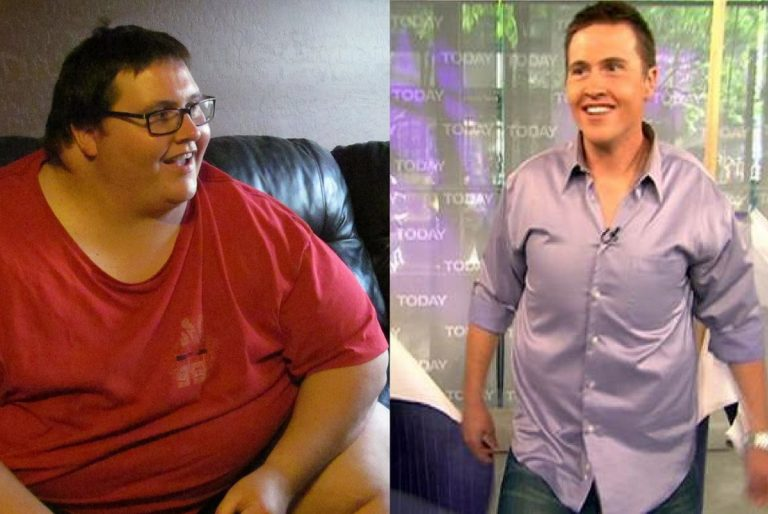
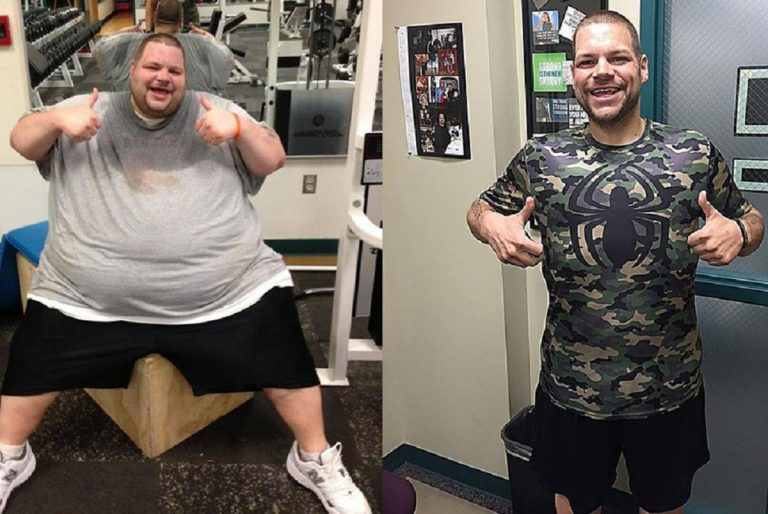
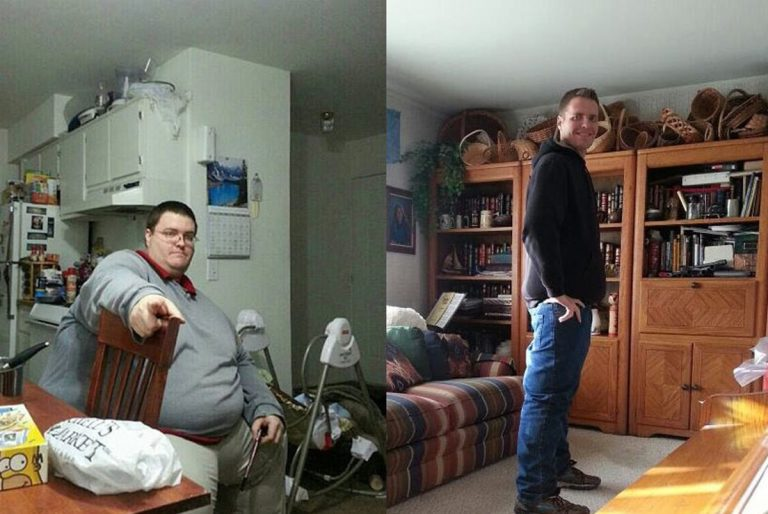
    Many people think weight gain is just about lack of willpower, but that’s far too simplistic. Genetics, hormones, and lifestyle all play a role, and some people face more challenges than others. Still, with commitment and support, major transformations are possible. Here are 10 of the most inspiring weight loss stories that prove how powerful determination can be:

    David Elmore Smith – Lost 185kg (62%). Once 294kg, David turned his life around with trainer Chris Powell’s help and small daily changes.

    Ronnie Brewer – Lost 180kg + 16kg skin (65%). After reaching 306kg, he used gym training and diet to change his life in two years.

    Danny Cahill – Lost 108kg (55.8%). Winner of The Biggest Loser, but later suffered metabolic issues despite his success.

    Brian Flemming – Lost 165kg (58%). From 283kg and deep depression, Brian turned to exercise and healthy habits after a wake-up call.

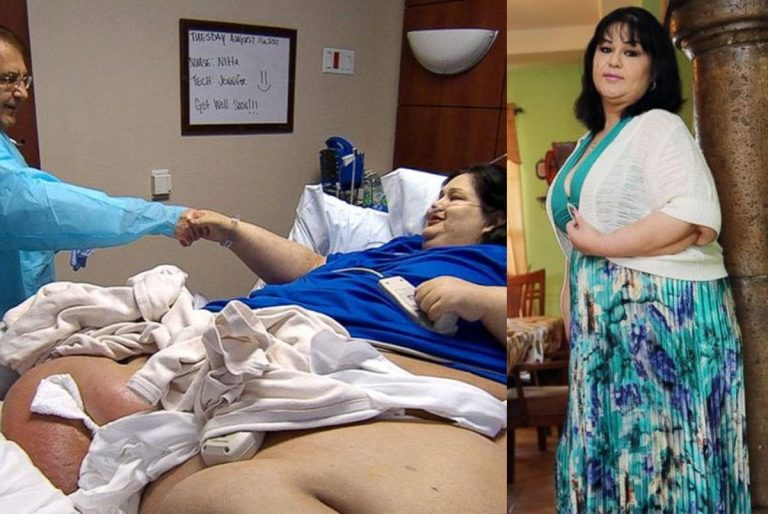
    Mayra Rosales – Lost 360kg (80%). Once nearly 470kg, her story involved 11 surgeries and a transformation few thought possible.

    These stories show that change is possible, even in the toughest situations. It’s not about perfection — it’s about persistence.

  • 🥵Teacher gets kicked out for PROV0V0CING her students and forces them to hav s… See more

    No One Expected This From Lady Gaga’s Vacation Wardrobe!
    More..
    Shocking Sports Moments Photographers Should Not Have Captured
    More…
    Meet The Most Inspiring Sheikhas Of The UAE
    More…
    Inside Air Force One
    More…

    Julia presented herself in a simple and unembellished outfit, marking a significant change while filming emotional scenes for August: Osage County in Bartsville, Oklahoma.

    Emotional performance: The brunette actress delivered a compelling and tearful portrayal.

    In her personal life, Julia, who has three children with her husband, cinematographer Daniel Moder, chose a layered ensemble, featuring a white shirt over a cream top, complemented by loose blue jeans.

    Her long brown hair was styled modestly for her role as Barbara Weston, a character in a family grappling with their differences after the disappearance of their alcoholic father.

    During a particularly dramatic scene, Ewan held Julia’s hand with anticipation as they approached a boat dock to identify a deceased person alongside the Sheriff.

    Casual appearance: The Pretty Woman star appeared quite plain as she filmed the intense moment of body identification.

    Upon discovering the corpse, Julia broke down in tears, seeking comfort in the embrace of Ewan’s character, Bill Fordham, as she continued to sob.

    Despite the emotional weight of the scene, Julia was spotted laughing heartily between takes.

    The actress was accompanied by Julianne Nicholson, who seemed to share a lighthearted moment with the group.

    Not her usual style: For her role as Barbara Weston, she donned jeans and layered tops. The Boardwalk Empire actress also opted for a similarly understated look, wearing a blue shirt and brown flared trousers, with her hair tied back in a ponytail.

    Other notable cast members in the 2013 film include Benedict Cumberbatch as ‘Little Charles Aiken’ and Meryl Streep as Violet Weston.

    According to the film’s IMDb page, Renée Zellweger and Andrea Riseborough were initially considered for a role.

    Riseborough was ultimately cast but had to withdraw due to scheduling conflicts, resulting in Juliette Lewis stepping in as Ka.